Galea Walkthrough
🙋 “What is Galea?”
📈 “What can it measure?”
🤔 “How comfortable is it?”
You can find these and more questions answered in the tutorial below!

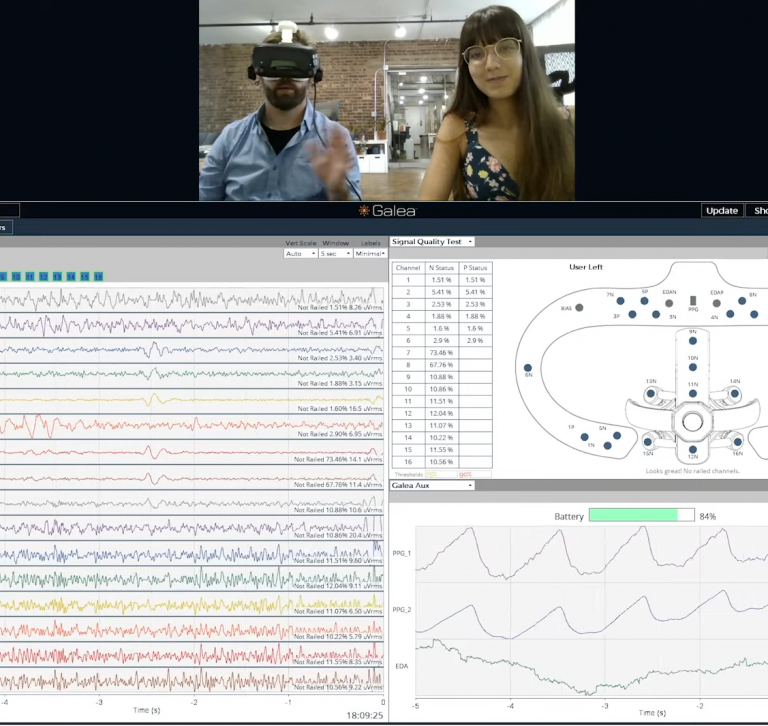
🙋 “What is Galea?”
📈 “What can it measure?”
🤔 “How comfortable is it?”
You can find these and more questions answered in the tutorial below!
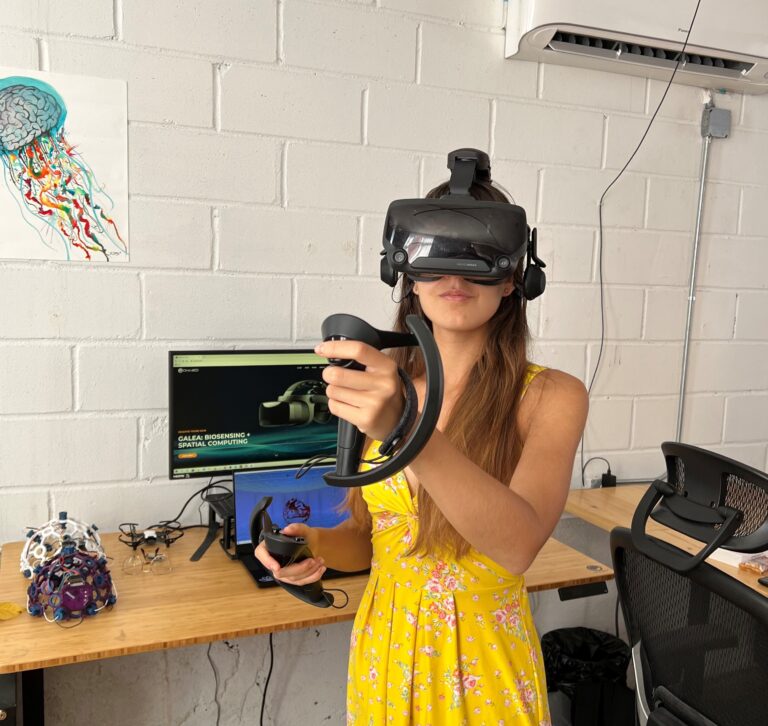
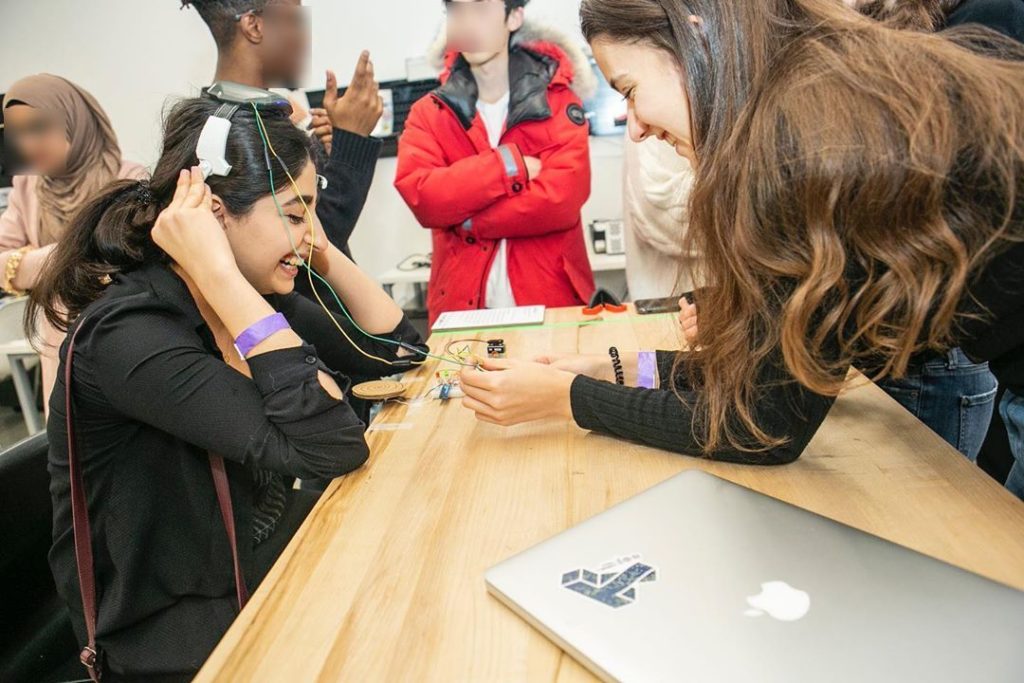
Two years ago I dipped my toes into brain-computer interface (BCI) technology by hacking a $30 Star Wars toy to read EEG data and make a cardboard wheel spin by concentrating on it. My team and I first showcased the prototype at the 2019 Cornell Tech Open Studio event. Although I understood the science behind it, putting the device on users’ heads and watching the wheel spin felt like magic!
Fast forward to today and my code is running on Galea, a $25K high-end platform that merges next-generation BCI systems with head-mounted displays. This work anniversary I’d like to reflect on how far I’ve come since I joined the OpenBCI team as an intern on July 1st, 2020. During my time with them, I have not only contributed to the whole technology stack—hardware, firmware, software, data processing, cloud—but I’ve acquired a solid foundation of knowledge in neuroscience and learnt key aspects of running a hardware business.
Most importantly, I’ve found my people. The OpenBCI team dreams big and works hard to build products that push the boundaries of what’s possible today. Together, we are shaping the future of human-computer interaction. I can’t wait to see what year three brings for us—let’s keep changing the world one BCI at a time!
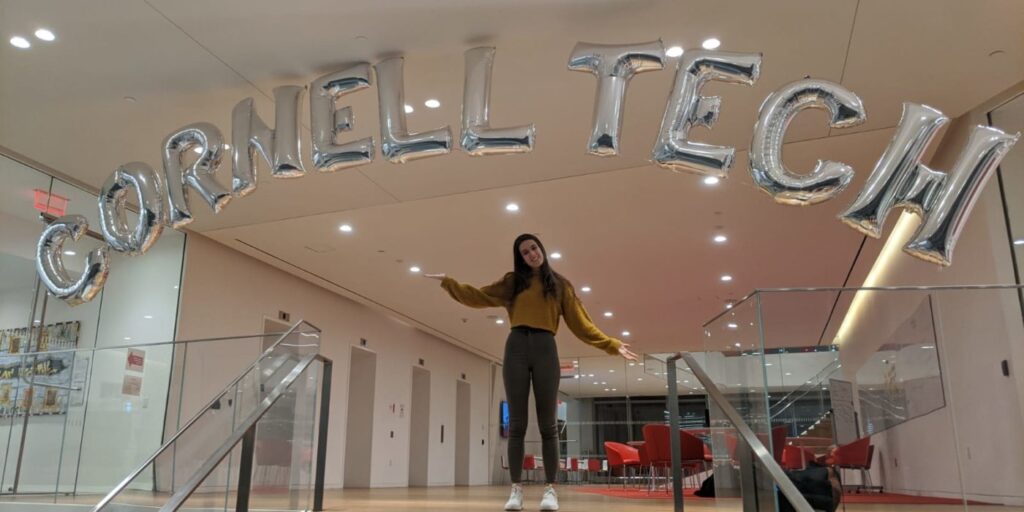


“If you don’t ask, you don’t get” is what my first manager, Christina Kalli, told me as I proceeded to make a case to our UK team at GE Healthcare on why I should be the first intern to travel abroad and present my research at the 2018 Alzheimer’s Association Conference in Chicago. It was at that conference that I learnt about neurotechnology and discovered my passion for the field.
For this year’s International Women in Engineering Day, I’d like to thank you for the support and guidance you’ve given me over the years. You took me under your wing during my first internship in 2017. That year, I learnt C#, Unreal Engine, Python and other technologies, but my most valuable takeaway was cultivating the habit to ask for opportunities even when I think the answer will be no. Often times, I find myself pleasantly surprised by a yes. And occasionally it changes my life, like that trip did.


I had a blast at AWE 2022 this week! It was exciting to showcase Galea and an honor for us at OpenBCI to receive the “Best Interaction Product” award. Congratulations to the Varjo team on winning the “Best Headworn Device” award.
I loved learning about the latest products in the AR/VR industry. From TRIPP, Inc.‘s VR meditation experiences to OWO Game‘s haptic videogame technology, the fast evolution of this industry blows my mind every time.
I’m excited to keep pushing the boundaries of what’s possible today and share it with all of you at #AWE2023!


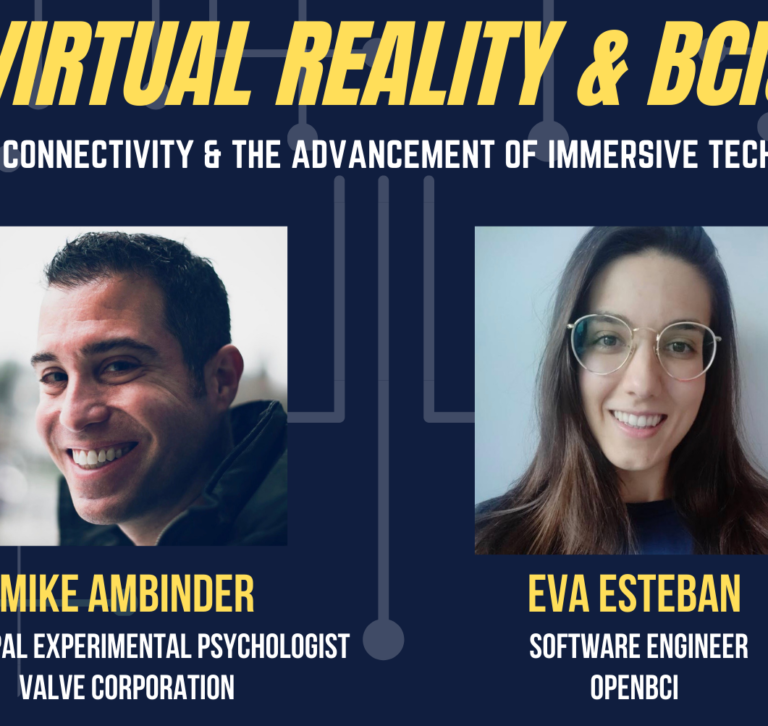
It was great to speak at the SMARTVR Center event on the future of virtual reality and brain-computer interface technologies!
This was my first event as a speaker for OpenBCI. I enjoyed listening to the other attendees, talking about our latest work in the field, and answering the public’s questions with Mike Ambinder from Valve Corporation.
I look forward to many more events like this one!
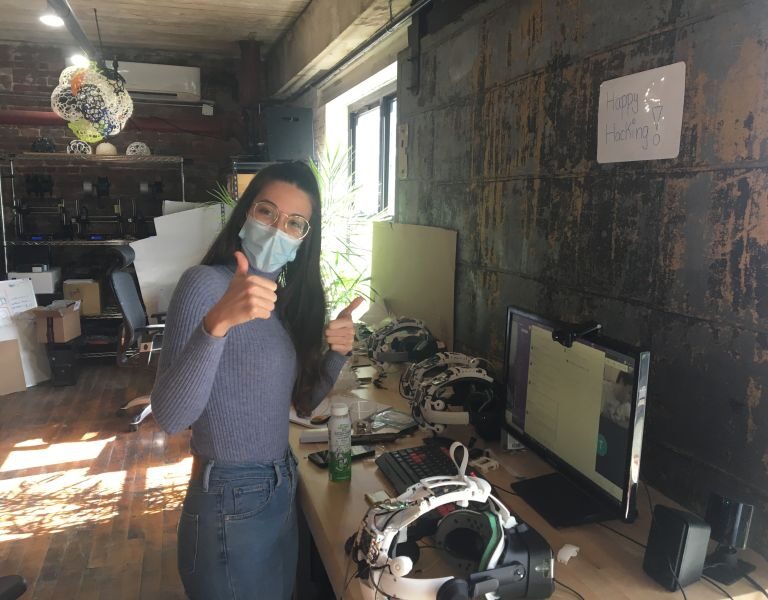
I can’t believe it’s been a year since I started working at OpenBCI!
Six years ago, I had to choose between pursuing engineering or psychology as a career path. While taking classes as an engineering student, I couldn’t help but devour psychology books in my free time. I fell in love with building intelligent systems that mimic the way our brain processes information, but how can we do that if we are just beginning to understand this incredibly complex organ that makes us who we are!
I finally found my place at the intersection of psychology and engineering, leading the neuro revolution with the incredible team at OpenBCI.
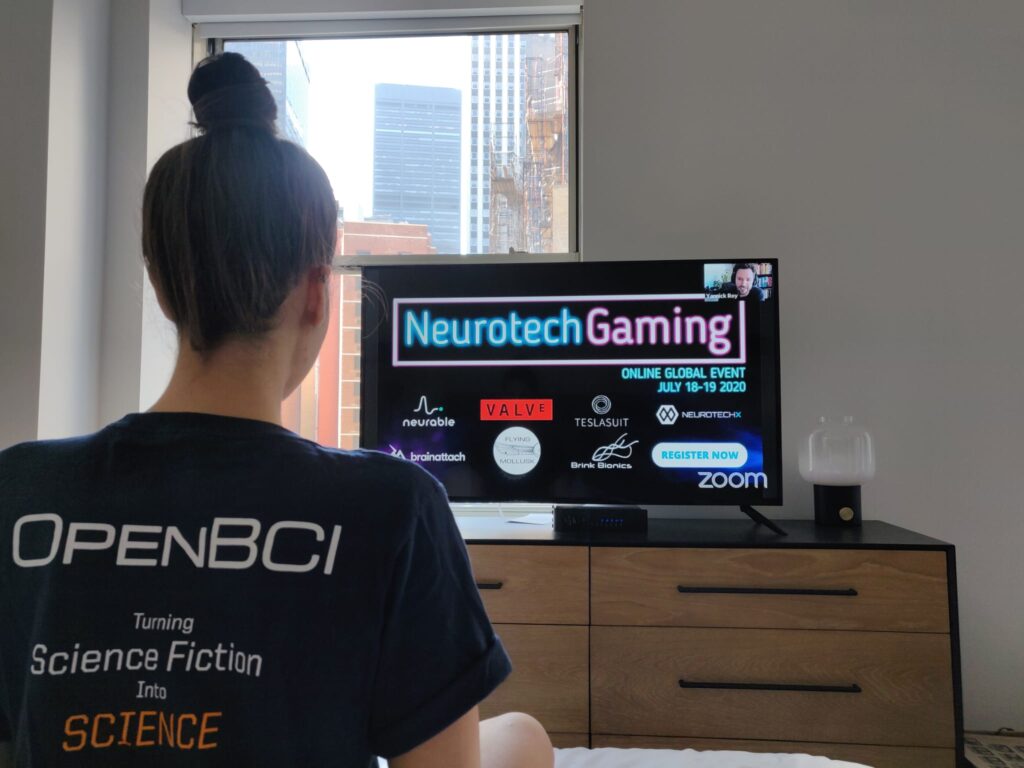
One of the first things that caught my eye about OpenBCI was their motto: Turning Science Fiction into Science.
As a kid, I wanted to be a magician, and I spent countless hours perfecting my tricks. I dreamt of creating experiences to make people feel like they were in a world where anything was possible. The joy people experience when they watch a trick only magic can explain for them is priceless to me. Of course, as the one performing the trick, you know it’s all based on logic and science.
As I grew up, I found myself having less time to learn tricks, and letting go of my dream to be a magician. I became interested in technology and pursued an engineering degree. When I first learnt about Brain-Computer Interfaces (BCIs) and started building devices with them, such as NeuroSpin, I could see the same joy in people’s faces as when they watched my magic tricks as a kid. “Are you really moving that with your brain? Is this magic?”, they’d ask.
Right now, biosensing technology allows us to move objects with our mind, track our concentration and relaxation through brainwave analysis, spell messages with our eyes, and many other crazy things. However, we’re yet to merge all these powerful tools into a fully-immersive experience where you have endless possibilities. This is where Galea comes in.
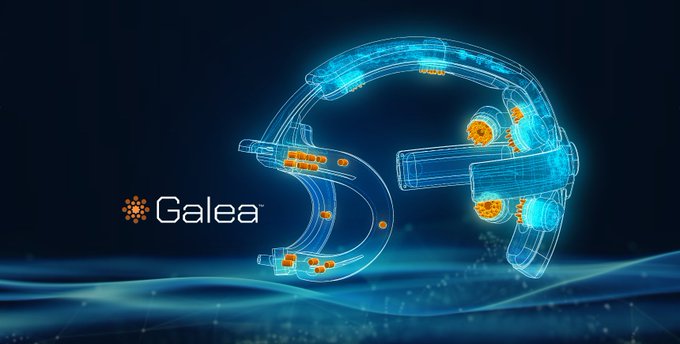
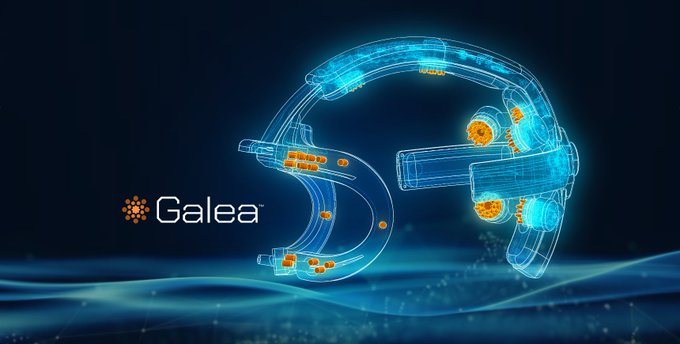
Earlier this year, at OpenBCI, we announced our latest product: Galea. Galea is a hardware and software platform that merges next-generation biometrics with mixed reality. It’s the first device that integrates EEG, EMG, EDA, PPG, and eye-tracking into a single headset. The Galea hardware will be integrated into existing AR and VR head-mounted displays and will include SDKs for bringing rich and tightly time-locked biometric data into 3D development engines, 3rd-party applications, and all common programming languages.
Galea opens up a world of possibilities for researchers, developers, and creators to understand and augment the human mind and body. Even though I haven’t become a magician in the traditional way, being part of the team behind Galea has allowed me to pursue my dream of creating experiences where anything is possible. It’s science, but it feels like magic.
To learn more about how to get your hands on a Galea unit, visit galea.co!

For the past few weeks been working hard at Unipeers to define our values and make sure our branding is aligned with them. Finally, our new logo and graphics are up at unipeers.org!

Living in Spain made applying to study in the UK and later in the US challenging for me. Not having anyone to ask at my dream schools or the cities I wanted to move to made me feel lost, overwhelmed and discouraged.
I’m grateful for persevering and getting through the process, but also aware there were times when I almost returned home. In an effort to prevent this from happening to others, Katie Donahoe and I are creating Unipeers.
What’s Unipeers? Learn all about it in my Medium article!
Image Source: Vectorpocket.
Excited to start my journey with OpenBCI today as a Computer Engineering Intern!
OpenBCI is an open source neurotechnology company with the mission to accelerate the ethical innovation of human-computer interface technologies. From the moment I discovered the neurotech field I knew I wanted to work for a company with such a powerful mission and community.
Glad to get the opportunity to make an impact in a field offering endless opportunities for innovation!